

Historical photo of kite-flying operations at Blue Hill Observatory, ca. 1890s–1900s. Check BHO archives.
April is National Kite Month, and at Blue Hill Observatory, that’s not just a reason to head outside — it’s a chance to look back at one of the more remarkable chapters in our scientific history.
Long before weather balloons and radiosondes carried instruments into the upper atmosphere, meteorologists needed another way to get there. At Blue Hill Observatory, the answer was kites.
Beginning in the 1890s, Observatory staff and researchers used large, purpose-built kites to carry meteorographs — instruments that recorded temperature, humidity, pressure, and wind — high above Great Blue Hill. The kites were flown in tandem, one after another on a single steel wire, to reach altitudes that would have been otherwise inaccessible. At its peak, the program was lifting instruments thousands of feet into the air on a regular basis, producing some of the earliest systematic records of upper-air conditions ever collected in the Western Hemisphere.
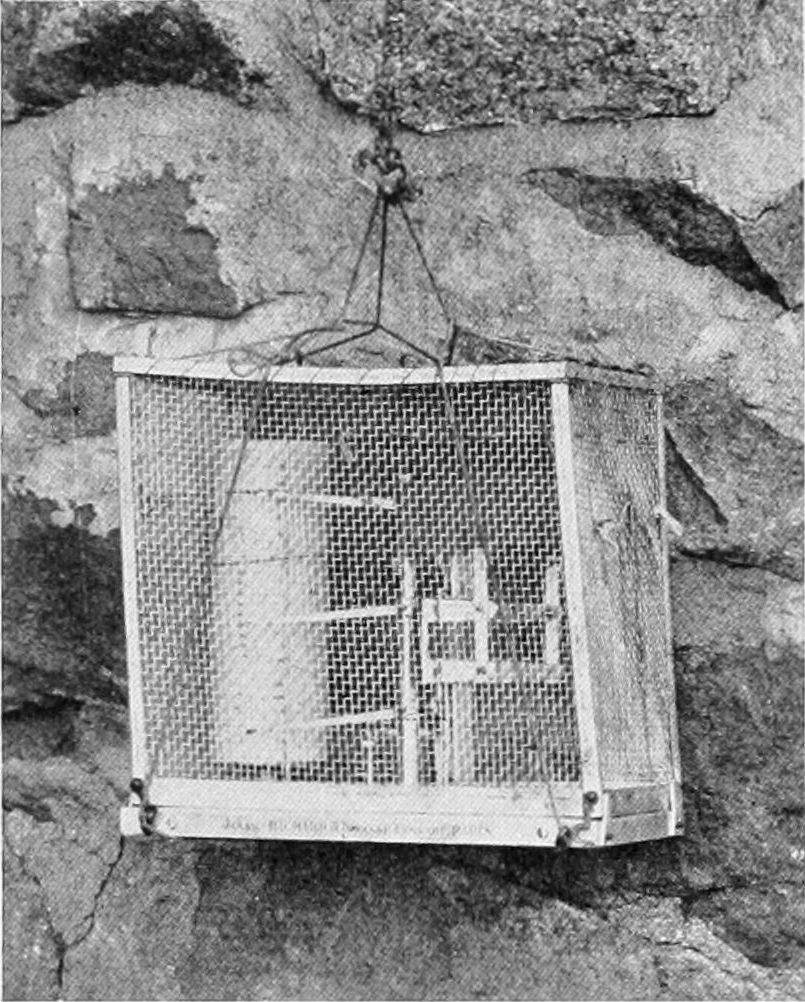
Close-up of a meteorograph instrument or Eddy kite diagram from BHO archives.
Much of this work was driven by Abbott Lawrence Rotch, Blue Hill Observatory’s’s founder and first director, who believed that understanding the atmosphere required studying it at altitude — not just at the surface. The kite program he championed helped lay the groundwork for what we now call upper-air meteorology, and the data collected here influenced researchers and forecasters around the world.
The kites themselves were engineering feats. Blue Hill Observatory was an early adopter of the Eddy kite — a tailless, bowed design that offered stability at altitude — and staff experimented constantly with configurations to maximize lift and instrument payload in New England’s unpredictable winds. A kite flight was not a casual affair. It required careful preparation, a crew, and the kind of patience that comes naturally to anyone who has spent time on top of a hill in April.
The kite era eventually gave way to balloons and then to modern upper-air sounding systems. But the spirit behind it — the drive to observe the atmosphere more completely, from the ground up — is the same one that has kept Blue Hill Observatory’s instruments running without interruption since 1885.
This month, if you see someone flying a kite, think of it as a tribute.


