Ice, wind, and short days: how to hike the Blue Hills in winter, and what to bring.

Blue Hills winter hiking rewards the effort: quiet trails, long views through bare trees, and rime ice on the summit of Great Blue Hill. It also asks more of you. Here is what changes in winter, which routes work best, and what to bring.
What changes Best winter routes What to bring Rime ice Observatory hours FAQ
Rocky trails hold ice long after a storm. Packed snow on steep sections turns slick fast, especially on the way down.
The summit is exposed. It is often much colder and windier at the top than in the parking lot.
The reservation is open dawn to dusk, and dusk comes early in December and January. Start early and turn around on time.
The steadiest footing to the top of Great Blue Hill, though it is steep and can be icy. The DCR map shows a winter closure notice for the road, so check current conditions before you go.
Flat and short, with free parking at 840 Hillside Street in Milton. The best choice on icy days.
Relatively level walking through hardwood forest, starting just north of the Trailside Museum. Good for a longer winter walk without the steep rock.
Steep rock and ledge. In winter, bring real traction, leave extra time, and skip them after a freeze-thaw cycle.
In ski season the Route 138 lot is shared with the Blue Hill Ski Area, so arrive early on weekends. See all the lots in our parking guide.
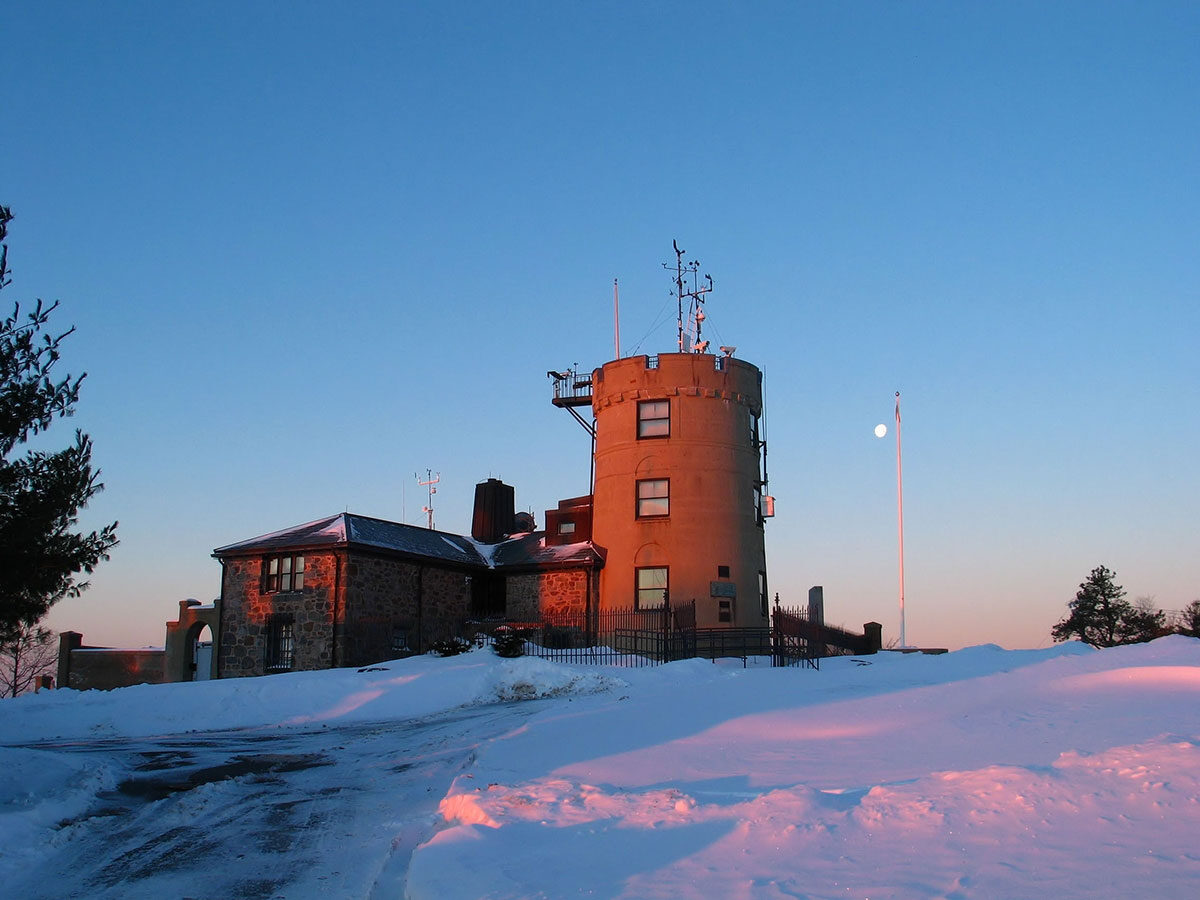
On foggy, freezing days, Great Blue Hill sits inside the cloud. Supercooled droplets freeze the moment they touch something cold, building feathery white ice on the windward side of trees, railings, and the Observatory tower.
Observers on the summit record conditions like this every day, as they have since February 1, 1885. Check the live summit cameras to see if the summit is in the cloud before you go.
| Season | Hours |
|---|---|
| Tuesday to Friday, December and February | 10:00 AM to 2:00 PM |
| Weekends and holidays, through December 31 | 10:00 AM to 4:00 PM |
| Weekends and holidays, February | 10:00 AM to 4:00 PM |
| January | Closed, except booked tours |
Closed Mondays, Thanksgiving, Christmas Eve, and Christmas Day. Current hours and tickets are on the Visit page. Guided tours can be booked any day by appointment.
Yes. The trails stay open dawn to dusk all year. Expect ice on the rocky sections, wind on the summit, and short days. Traction devices make a big difference.
On most winter days, yes. Packed snow turns to ice quickly on the rocky trails, especially the Red Dot Trail and the Skyline. Light traction devices that slip over your boots are enough for most hikes.
The Observatory is closed all of January except for booked tours. In February and December it is open Tuesday to Friday from 10:00 AM to 2:00 PM and weekends from 10:00 AM to 4:00 PM. It is closed Mondays, Thanksgiving, Christmas Eve, and Christmas Day.
Rime forms when supercooled cloud or fog droplets freeze on contact with cold surfaces. It builds feathery white ice on the windward side of trees, railings, and the Observatory tower, and it is one of the best winter sights on the summit.
The Yellow Dot loop around Houghton’s Pond, about 1.15 miles, with free parking on Hillside Street in Milton. They are flat and short, a good choice when the hills are icy.
Guided hikes
Our staff lead groups up Great Blue Hill, connecting the trail to the landscape, the climate record, and 141 years of daily observation. Every guided hike ends inside the Observatory. Guided hikes run all winter.
Step inside the Observatory, see the instruments that have tracked 141 winters, and stop at Café 635.
Monthly Skymail, event announcements, and research summaries.