
Weather Event & Record · May 2026
95°F in May.
A New Record on Great Blue Hill.
On May 19 and 20, 2026, Great Blue Hill experienced a remarkable early-season heat event — one that shattered a daily temperature record and pushed the thermometer more than 27 degrees above normal. Events like this are only fully understood in context, and context is exactly what 141 years of continuous observation makes possible.
May 19 — New Daily Record
95°F
Previous record: 91°F | Normal high: 68°F
May 20 — Near Record
89°F
Previous record: 91°F | Normal high: 68°F
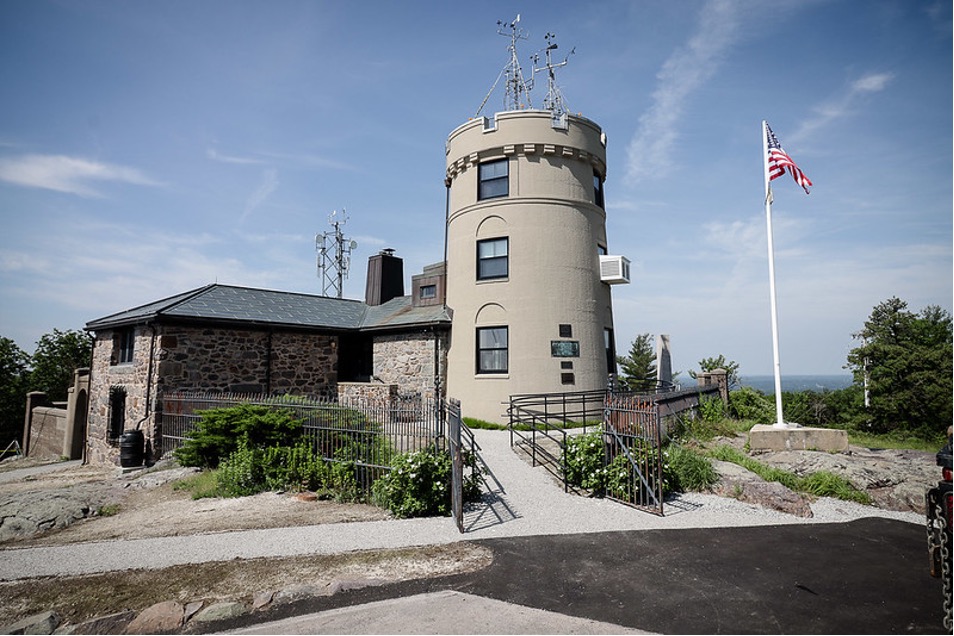
View of the Blue Hill Observatory. On May 19, 2026, the temperature at this summit reached 95°F — a new daily record. Photo: Blue Hill Observatory & Science Center.
The Event
What Happened on May 19–20
Blue Hill Observatory · May 19–20, 2026
On May 19, 2026, the temperature at Blue Hill Observatory reached 95°F — shattering the previous daily record of 91°F and running a full 27°F above the 1991–2020 normal high for that date. It stands as one of the most dramatic early warm-season departures from normal recorded at this summit.
The heat continued the following day. On May 20, the high reached 89°F — still well above the 68°F normal, and just 2°F shy of the previous record for that date. The back-to-back nature of the event made it a notable multi-day episode for a month that typically still sees overnight lows in the low 50s.
At 95°F, May 19 ran 27 degrees above normal for the date — and set a new record that now joins 141 years of documented history at this summit.
May 19–20 daily high temperatures vs. the 1991–2020 normal (68°F) and previous record highs. May 19 set a new daily record at 95°F. Blue Hill Observatory & Science Center.
For observers on the hill, the two days offered a striking contrast with the surrounding spring landscape — the pear tree still in late bloom, blueberry shrubs freshly leafed out — beneath temperatures more typical of late July than mid-May.
The Record in Context
Why 141 Years of Data Makes This Meaningful
A temperature record is only meaningful when there is a record to break. Blue Hill Observatory has maintained continuous daily atmospheric observations since 1885 — the longest such record in the Western Hemisphere — which means that when we say May 19 set a new high, that statement carries the full weight of well over a century of documented comparison.
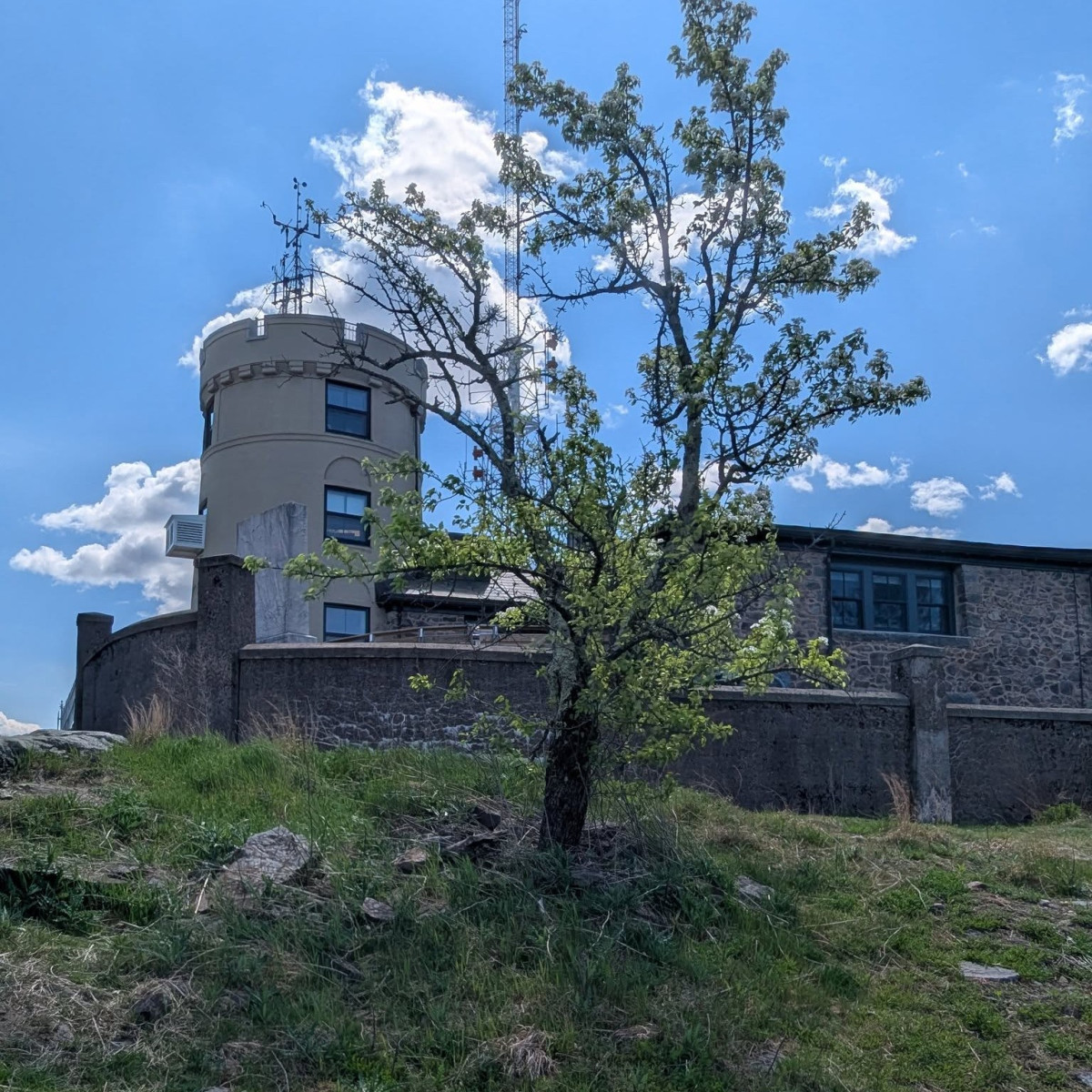
The pear tree still in late bloom — May on Great Blue Hill, well before typical summer heat.

The summit in spring — a landscape that saw July-like temperatures arrive more than two months early.
Events like this one underscore the irreplaceable scientific value of long-term observational records. Understanding how today’s weather compares to the past requires exactly the kind of painstaking, consistent data collection that has defined Blue Hill Observatory for generations.
The Record in Numbers
The previous May 19 record of 91°F stood for decades before being eclipsed by 4°F on a single afternoon. Blue Hill Observatory’s record — stretching back to 1885 — is what tells us that number meant something.
By the Numbers
May 19–20 At a Glance
| Date | Normal High | Previous Record | Observed High | Result |
|---|---|---|---|---|
| May 19 | 68°F | 91°F | 95°F | New Record |
| May 20 | 68°F | 91°F | 89°F | 2° shy of record |
Normal based on 1991–2020 averages. All observations recorded at Blue Hill Observatory, Milton, MA (elevation 635 ft).
Why It Matters
Records like this only exist
because the record was kept.
Blue Hill Observatory has observed and recorded the weather on this hilltop every single day since 1885 — the longest continuous record in the Western Hemisphere. Help us keep it going.
Support Blue Hill Observatory


