

The Climb Nobody Sees: Keeping Our Weather Instruments Ready
Behind the Scenes · Instruments & Maintenance
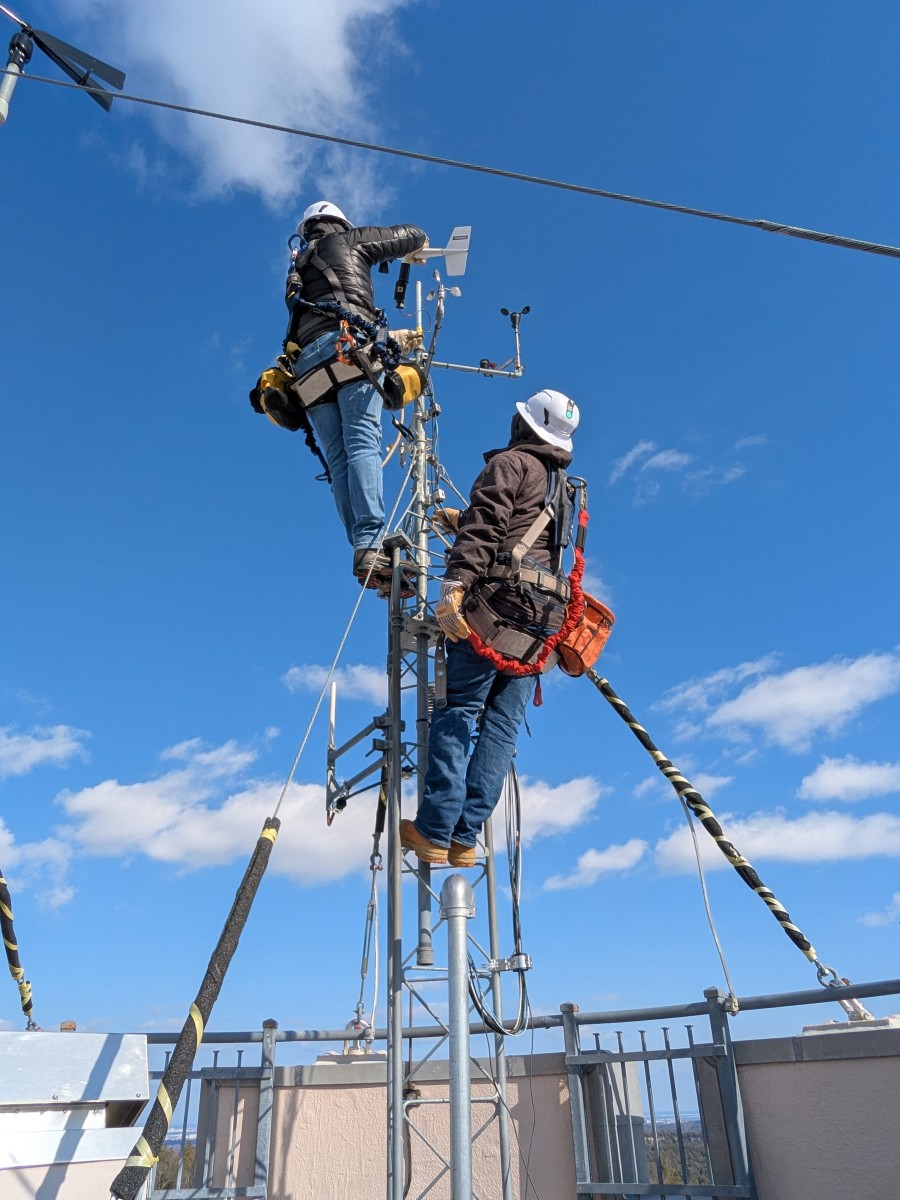
The historic snowfall totals and wind records from February’s major storm didn’t happen by accident. Behind every data point in Blue Hill Observatory’s 141-year climate record is a network of carefully maintained instruments — and the people who keep them working, in all conditions, all year long.
This month, a team of tower climbers visited the Observatory to perform routine maintenance on two key pieces of our wind measurement equipment. It’s quiet, unglamorous work. But without it, the data doesn’t exist.
What Was Serviced This Month
Contacting Anemometer
The contacting anemometer measures wind speed by counting the rotation of cups as wind passes through them. Over time, the mechanical contacts that register each rotation require lubrication to remain accurate. This month, technicians carefully oiled the mechanism — particularly important heading into spring, when active weather patterns return to the region.
RM Young Aerovane
The RM Young Aerovane measures both wind speed and direction simultaneously, making it one of our most important instruments for capturing the full picture of summit conditions. Technicians repositioned and secured the unit this month to ensure it is properly oriented and functioning ahead of the spring and summer observation seasons.
Why This Work Matters
It might seem straightforward — oil a bearing, adjust a mount — but the stakes are higher than they appear. Blue Hill Observatory’s climate record is valuable precisely because of its consistency over 141 years. A miscalibrated anemometer, a stuck wind vane, or a missed reading doesn’t just affect today’s forecast. It creates a gap or an error in a dataset that scientists, researchers, and climatologists rely on to understand long-term trends.
141 years of unbroken observation. Every record we’ve ever set — including the 68 mph peak gust recorded during February’s historic snowstorm — is only meaningful because the instruments that captured it were properly maintained and trusted.
The 68 mph peak gust recorded during the February 22–23 storm, for example, is only a reliable data point because our wind instruments were recently serviced and in proper working order. That number — and the storm records it helped document — now belong permanently to Blue Hill’s climate archive.
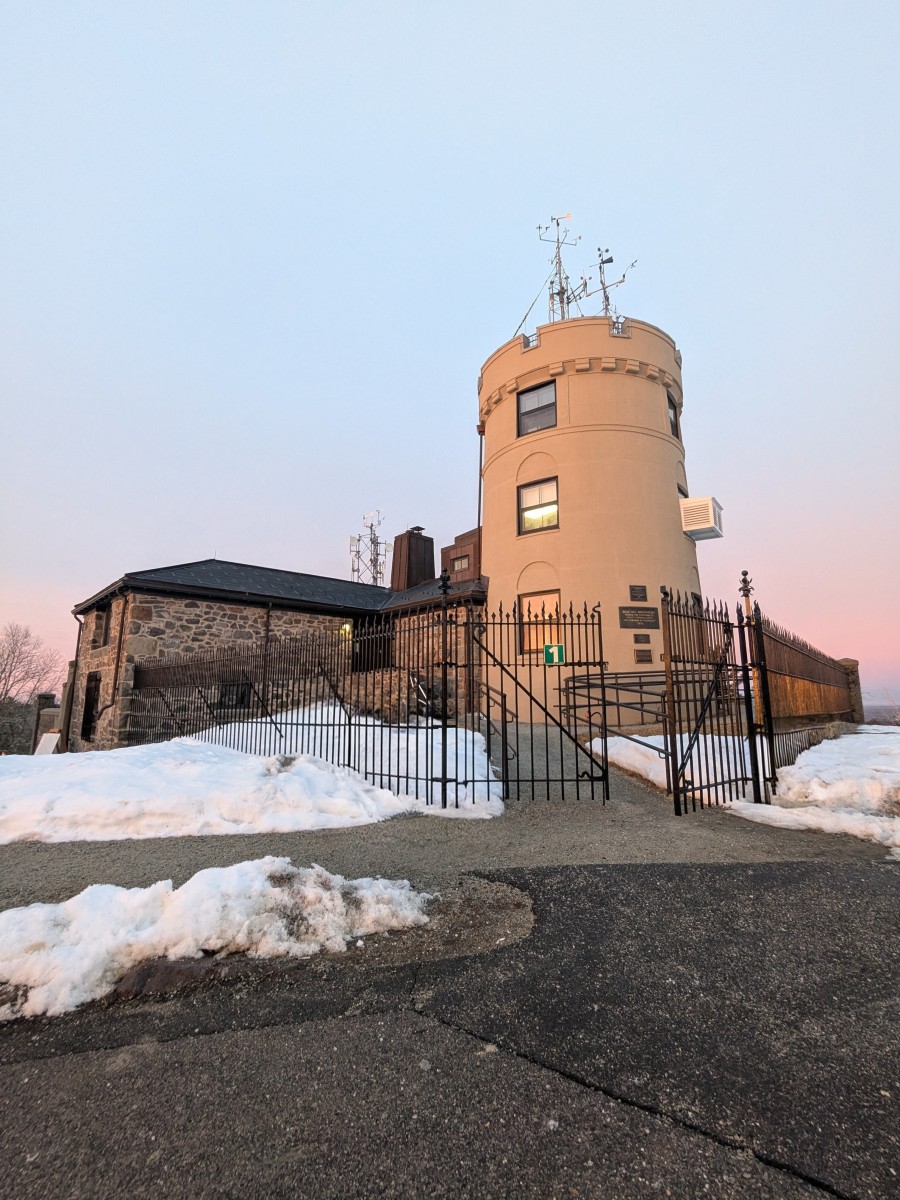
A Continuous Effort
Instrument maintenance at Blue Hill isn’t a once-a-year event. Our team monitors equipment performance continuously, and physical inspections and servicing happen throughout the year — on calm days and stormy ones alike. Tower climbers, observers, and technical staff all play a role in keeping the station running.
We’ll be sharing more behind-the-scenes updates like this one throughout the year. If you’re curious about how a specific instrument works, or what it takes to maintain an active weather station on an exposed summit, we’d love to hear from you.


